The Journal of Public and International Affairs
Published since 1886 by the Academy of Political Science
Archive Search
Advanced Options
Volume 137 - Number 4 - Winter 2022-23 | |
|
The Polarized American Electorate: The Rise of Partisan-Ideological Consistency and Its Consequences |
pp. 645-674 |
|
Power Shifts: Congress and Presidential Representation, John A. Dearborn |
pp. 779-780 |
|
American Political Thought: An Invitation, Ken Kersch |
pp. 780-782 |
|
Firepower: How the NRA Turned Gun Owners into a Political Force, Matthew J. Lacombe |
pp. 811-812 |
Volume 137 - Number 3 - Fall 2022 | |
|
Assessing Futures Intelligence: Looking Back on Global Trends 2025 |
pp. 481-510 |
|
Changing Their Minds? Donald Trump and Presidential Leadership, George C. Edwards III |
pp. 599-600 |
|
Where Great Powers Meet: America and China in Southeast Asia, David Shambaugh |
pp. 600-602 |
|
Fighting the First Wave: Why the Coronavirus Was Tackled So Differently across the Globe, Peter Baldwin |
pp. 602-603 |
|
Civic Gifts: Voluntarism and the Making of the American Nation-State, Elisabeth S. Clemens |
pp. 631-633 |
|
The Women of 2018: The Pink Wave in the US House Elections… and Its Legacy in 2020, Barbara Burrell |
pp. 633-634 |
|
Informing a Nation: The Newspaper Presidency of Thomas Jefferson, Mel Laracey |
pp. 634-636 |
Join the Academy of Political Science and automatically receive Political Science Quarterly.
The Future of Global Politics
June 26, 2025
7:30 p.m.–9:00 p.m. ET
WEBINAR
Jimmy Carter's Legacy
Jimmy Carter's Public Policy Ex-Presidency
John Whiteclay Chambers II
Publishing since 1886, PSQ is the most widely read and accessible scholarly journal with distinguished contributors such as: Lisa Anderson, Robert A. Dahl, Samuel P. Huntington, Robert Jervis, Joseph S. Nye, Jr., Theda Skocpol, Woodrow Wilson
view additional issuesArticles | Book reviews
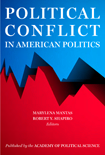 |
POLITICAL CONFLICT IN AMERICAN POLITICS |
The Academy of Political Science, promotes objective, scholarly analyses of political, social, and economic issues. Through its conferences and publications APS provides analysis and insight into both domestic and foreign policy issues.
With neither an ideological nor a partisan bias, PSQ looks at facts and analyzes data objectively to help readers understand what is really going on in national and world affairs.


