Volume 139 - Number 1 - Spring 2024
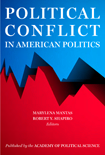
Introduction: Black Power and the Civil Rights Agendas of Charles V. Hamilton Marylena Mantas and Robert Y. Shapiro present a virtual volume of Political Science Quarterly honoring the preeminent political scientist Charles V. Hamilton (October 19, 1929 – November 18, 2023).
Get acces to the virtual issue at: https://academic.oup.com/psq/pages/black-power-and-the-civil-rights-agendas-of-charles-v-hamilton
Volume 134 - Number 3 - Fall 2019
Will the Outcome be “Democratic”?: Delegate Selection and the 2020 Primaries Marianna Palumbo and Robert Y. Shapiro raise the question of whether the 2020 presidential candidate selection process will produce a "democratic" consensus choice.
Volume 134 - Number 1 - Spring 2019
On To the Convention, Again Caroline Monahan and Robert Y. Shapiro examine the role of the presidential convention in the party nomination process and plausibly question whether 2020 will hold the first brokered convention since 1952.
Volume 134 - Number 1 - Spring 2019
Voter ID Laws: The Disenfranchisement of Minority Voters? Ben Pryor , Rebekah Herrick and James A. Davis examine the effects of strict voter identification laws on minority voter suppression. They analyze United States Census data and find that strict identification laws do not appear to disproportionally suppress voter turnout among minority groups.
Volume 133 - Number 3 - Fall 2018
Bipolarity and the Future of U.S.-China Relations RICHARD MAHER discusses the prospect of returning to a bipolar international system characterized by U.S.-China bipolarity. He argues that the consequences and implications will diverge in several respects from those that prevailed under the U.S.-Soviet bipolarity of the Cold War era.
Volume 133 - Number 2 - Summer 2018
The South China Sea and U.S.-China Rivalry Andrew Scobell analyzes why the South China Sea has become a central matter in U.S.–China relations. He contends that geopolitics explains why this body of water has become such a contentious issue.
Volume 133 - Number 1 - Spring 2018
Understanding White Polarization in the 2016 Vote for President: The Sobering Role of Racism and Sexism Tatishe Nteta examine the extent to which economic insecurity, racism, and sexism were important factors in determining vote choices in the 2016 American presidential election. They find that racism and sexism were particularly strong predictors of vote choice in 2016, while economic insecurity was much less important.
Volume 132 - Number 3 - Fall 2017
The Racial Gap in Wait Times: Why Minority Precincts Are Underserved by Local Election Officials STEPHEN PETTIGREW demonstrates that voters in mostly minority electoral precincts wait considerably longer than those in predominantly white precincts. He finds that a considerable amount of this racial gap can be attributed to logistical decisions made by local election officials.
Volume 131 - Number 3 - Fall 2016
The Impact of Voter Fraud Claims on Voter Registration Reform Legislation MARGARET GROARKE examines the impact that claims of voter fraud has had on three cases of voter registration reforms in the United States. She argues that the opposition that these legislative efforts faced is best understood as a partisan strategy to redistribute the electorate.
Volume 130 - Number 4 - Winter 2015-16
Lame-Duck Presidents and Supreme Court Appointees Demetrios James Caraley explains that the lame-duck president John Adams appointed a chief justice in the last weeks of his term, after having been defeated for reelection.