The Journal of Public and International Affairs
Published since 1886 by the Academy of Political Science
Archive Search
Advanced Options
pp. 135-137
Liberal Freedom: Pluralism, Polarization, and Politics, Eric MacGilvray
Dialogue across disagreement and difference is essential to a functioning polity but is increasingly seen as under threat from mounting partisan hostility and distrust. While discussions of this polarization often focus on a familiar set of narratives, Eric MacGilvray offers a fresh approach focused on a less well-examined concern: the need for a shared vocabulary of freedom.
Liberal Freedom sets itself two ambitious tasks. The first is to develop a liberal conception of freedom that can overcome the shortcomings of both a state-centered republicanism/socialism and a market-centered libertarianism/neoliberalism. Contrary to much liberal thought post-Rawls, the emerging position sees liberty, not justice, as the first political virtue. The second task is to show that this liberty-first liberalism can better address the problem of polarization than its justice-first rivals.
MacGilvray defends a plural conception of freedom focused on the social positions of persons and concerned with the competing demands of both republican and market freedom (chapter one). Republican freedom consists in the status of being a responsible agent and is concerned with defining the background conditions of action which are collectively authorized and mark out where individuals can be held responsible for their choices. Market freedom, alternatively, consists in th
To continue reading, see options above.
Join the Academy of Political Science and automatically receive Political Science Quarterly.
Environmental Opportunities
May 8, 2025
7:30 p.m.–9:00 p.m. ET
WEBINAR
Jimmy Carter's Legacy
Jimmy Carter's Public Policy Ex-Presidency
John Whiteclay Chambers II
Publishing since 1886, PSQ is the most widely read and accessible scholarly journal with distinguished contributors such as: Lisa Anderson, Robert A. Dahl, Samuel P. Huntington, Robert Jervis, Joseph S. Nye, Jr., Theda Skocpol, Woodrow Wilson
view additional issuesArticles | Book reviews
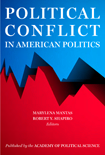 |
POLITICAL CONFLICT IN AMERICAN POLITICS |
The Academy of Political Science, promotes objective, scholarly analyses of political, social, and economic issues. Through its conferences and publications APS provides analysis and insight into both domestic and foreign policy issues.
With neither an ideological nor a partisan bias, PSQ looks at facts and analyzes data objectively to help readers understand what is really going on in national and world affairs.


