The Journal of Public and International Affairs
Published since 1886 by the Academy of Political Science
Archive Search
Advanced Options
pp. 127-131
American Secret Intelligence: A Review Essay
John Prados comments on two recent books in the intelligence field that focus on spies and on Central Intelligence Agency (CIA) organization for scientific and technical work. From the spy as con artist to the cloak and dagger uses of laboratories and drafting tables, the works recast images of intelligence or break new ground in little understood areas. Both retain relevance today, although the main problems of intelligence are shifting away from areas where the CIA is strongest.
No End to War: Terrorism in the Twenty-First Century, Walter Laqueur Reviewed by John Prados
Join the Academy of Political Science and automatically receive Political Science Quarterly.
APS Forum | Book Talk - The Insiders' Game: How Elites Make War and Peace
June 22, 2026
WEBINAR
CONTRIBUTIONS TO POLITICAL SCIENCE
Governing by Decree: The Trump Presidency and the Decline of “Legislating Together”
Desmond King
Publishing since 1886, PSQ is the most widely read and accessible scholarly journal with distinguished contributors such as: Lisa Anderson, Robert A. Dahl, Samuel P. Huntington, Robert Jervis, Joseph S. Nye, Jr., Theda Skocpol, Woodrow Wilson
view additional issuesArticles | Book reviews
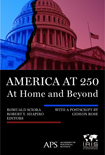 |
AMERICA AT 250:
AT HOME AND BEYOND |
The Academy of Political Science, promotes objective, scholarly analyses of political, social, and economic issues. Through its conferences and publications APS provides analysis and insight into both domestic and foreign policy issues.
With neither an ideological nor a partisan bias, PSQ looks at facts and analyzes data objectively to help readers understand what is really going on in national and world affairs.


