The Journal of Public and International Affairs
Published since 1886 by the Academy of Political Science
Archive Search
Advanced Options
pp. 452-455
Vigilante Islamists: Religious Parties and Anti-State Violence in Pakistan, Joshua White
As White notes, one of the most striking developments in Pakistan over the last forty years has been the ascendance of violent religious movements that have taken on the state and its citizenry, justifying their actions based on Islamic law. This observation is salient: Pakistan is consistently among the world's most violent countries according to the Global Peace Index (See various annual reports Institute for Economics and Peace, Global Peace Index, https://www.economicsandpeace.org/reports//). Between 6 March 2000, and 23 February 2026, there were more than 18,537 terrorist attacks in which 74,309 people lost their lives, which is nearly fourfold more than the combined Pakistani death toll of 20,000 from all major wars with India combined (South Asia Terrorism Portal, “Yearly Fatalities, Pakistan,” 23 February 2026. https://www.satp.org/datasheet-terroristattack/fatalities/pakistan).
While this violence is not new, beginning in the 1990s, Pakistan experienced newly potent forms of antistate violence from religious movements. Rather than studying the myriad groups that “inhabit the radical fringe,” this book studies some of their most important enablers, interlocutors and competitors: Pakistan's Islamic political parties” (4). In this ground-breaking book, White asks “why these parties enable religiously justified a
To continue reading, see options above.
Under the Gun: Political Parties and Violence in Pakistan, Niloufer A. Siddiqui Reviewed by C. CHRISTINE FAIR
Pakistan’s Pathway to the Bomb: Ambitions, Politics, and Rivalries, Mansoor Ahmed Reviewed by C. CHRISTINE FAIR
Explaining Why Some Muslims Support Islamist Political Violence, C. CHRISTINE FAIR and Parina Patel
Join the Academy of Political Science and automatically receive Political Science Quarterly.
APS Forum | Book Talk - The Insiders' Game: How Elites Make War and Peace
June 22, 2026
WEBINAR
CONTRIBUTIONS TO POLITICAL SCIENCE
Governing by Decree: The Trump Presidency and the Decline of “Legislating Together”
Desmond King
Publishing since 1886, PSQ is the most widely read and accessible scholarly journal with distinguished contributors such as: Lisa Anderson, Robert A. Dahl, Samuel P. Huntington, Robert Jervis, Joseph S. Nye, Jr., Theda Skocpol, Woodrow Wilson
view additional issuesArticles | Book reviews
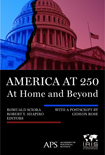 |
AMERICA AT 250:
AT HOME AND BEYOND |
The Academy of Political Science, promotes objective, scholarly analyses of political, social, and economic issues. Through its conferences and publications APS provides analysis and insight into both domestic and foreign policy issues.
With neither an ideological nor a partisan bias, PSQ looks at facts and analyzes data objectively to help readers understand what is really going on in national and world affairs.


