The Journal of Public and International Affairs
Published since 1886 by the Academy of Political Science
Archive Search
Advanced Options
pp. 16-39
Dean Acheson and the Korean War
David S. McLellan analyzes why fundamentally cautious and calculating Secretary of State Dean Acheson agreed to permit the United Nations forces to undertake the unification of all Korea. He argues that Acheson misjudged the intentions of Peking and mistakenly shared the prevailing confidence that MacArthur could accomplish his mission and that Chinese intervention, if it did occur, could be contained within a buffer zone. He concludes that Acheson failed to keep Truman adequately informed of both the political and the military risks, which ultimately led the President to allow MacArthur to advance.
Join the Academy of Political Science and automatically receive Political Science Quarterly.
Environmental Opportunities
May 8, 2025
7:30 p.m.–9:00 p.m. ET
WEBINAR
Jimmy Carter's Legacy
Jimmy Carter's Public Policy Ex-Presidency
John Whiteclay Chambers II
Publishing since 1886, PSQ is the most widely read and accessible scholarly journal with distinguished contributors such as: Lisa Anderson, Robert A. Dahl, Samuel P. Huntington, Robert Jervis, Joseph S. Nye, Jr., Theda Skocpol, Woodrow Wilson
view additional issuesArticles | Book reviews
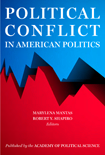 |
POLITICAL CONFLICT IN AMERICAN POLITICS |
The Academy of Political Science, promotes objective, scholarly analyses of political, social, and economic issues. Through its conferences and publications APS provides analysis and insight into both domestic and foreign policy issues.
With neither an ideological nor a partisan bias, PSQ looks at facts and analyzes data objectively to help readers understand what is really going on in national and world affairs.


