Content in

Volume 140 - Number 4 - Winter 2025-26

You have access
to this content
 

What Is My Duty as a Voter?: Frederick Douglass's Framework for the Civic Responsibility of Voting
ZACHARY GERMAN analyzes the speeches and writing of Frederick Douglass. He argues that Douglass develops a general framework on how citizens can fulfill the civic responsibility of voting.

pp. 669-686
 

Perceptions, Reality, and Tolerance for Voting Wait Times in American Elections and Their Consequences for Democracy
Costas Panagopoulos and Philip Moniz look at voter perceptions of wait time and willingness to wait. They find discrepancies between who expects and who is willing to wait through longer lines to cast their ballot.

pp. 687-704
 

Declining U.S. Soft Power in East Asia: Evaluations of the U.S. COVID-19 Response by Citizens of China, Japan, and South Korea
Yida Zhai examines how Chinese, Japanese, and South Korean citizens evaluated the U.S. response to the COVID-19 pandemic. They find that the public in China reacted differently than their counterparts and argue that the findings highlight the significance of the political-psychological factors.

pp. 705-722
 

A Cross-National Analysis of Trust and Support for Pandemic Response Measures
James D. Bryan and A. Carl LeVan uses survey data from 57 countries to analyze the relationship between political trust and public reaction to public health recommendations during COVID-19. They find that political trust across different institutions predicts support for policies seeking to manage health risks.

pp. 723-751
 

Can Credibility Overcome Elite Polarization?
DANIEL HOPKINS and Gall O. Sigler review Uncertain Futures: How to Unlock the Climate Impasse by Alexander Gazmararian and Dustin Tingley. They argue that the book provides a much-needed view of the energy transition from the ground-up and reflects on the limited attention given to the principal-agent problem.

pp. 753-762
 

Protest and Legislative Behavior in Perilous Times
LORRAINE MINNITE discusses the contributions that The Advantage of the Disadvantage by LaGina Gause makes to the study of social movements and reflects on the dynamics of contention of contemporary rightwing political movements.

pp. 763-775
 

The New Urban Rebellions: A Review Article
Jeff Goodwin reviews The Revolutionary City by Mark R. Beissinger. He highlights the arguments on the decline of social revolutions and the rise of a new kind of rebellion, which the author calls the urban civic revolt.

pp. 777-786
 

Danielle Allen's Design for Democracy: A Review Essay
David Johnston critically evaluates Danielle Allen’s Justice by Means of Democracy. He observes that the policy proposals advanced in the book to strengthen participatory constitutional democracy could benefit from further clarity on principles, institutions, and democratic practices.

pp. 787-798
 

Can Public Policy Influence Public Opinion? Studying Feedback Effects and Elite Influence Using the Affordable Care Act
MICHAEL SANCES reviews Stable Condition by Daniel J. Hopkins. He highlights the key contributions of the book to the literature on policy feedback and reflects on the book’s conclusions of opinion stability.

pp. 799-806
 

Cities on a Hill: American Religious Exceptionalism and White Christian Nationalism
Clyde Wilcox reviews The Everyday Crusade: Christian Nationalism in American Politics by Eric L. McDaniel, Irfan Nooruddin and Allyson F. Shortle. He reflects on the book’s contributions to the study of American politics, public opinion analysis, and the impact of American religious exceptionalism on public attitudes toward national and international issues.

pp. 807-813
 

Divergent Democracy: How Policy Positions Came to Dominate Party Competition, Katherine Krimmel
Reviewed by Frances Lee

pp. 815-817
 

Nations Before the Nation-State: Between City-State and Empire from Antiquity to the Present, Anna Marisa Schön
Reviewed by Ryan D. Griffiths

pp. 817-818
 

The Art of State Persuasion: China's Strategic Use of Media in Interstate Disputes, Frances Yaping Wang
Reviewed by Rachel Hulvey

pp. 819-820
 

Redefining the Political: Black Feminism and the Politics of Everyday Life, Alex J. Moffett-Bateau
Reviewed by Julia Jordan-Zachery

pp. 821-822
 

The Holy Alliance: Liberalism and the Politics of Federation, Isaac Nakhimovsky
Reviewed by Aaron L. Herold

pp. 823-824
 

Cyber Sovereignty: The Future of Governance in Cyberspace, Lucie Kadlecová
Reviewed by Erica D. Lonergan

pp. 824-826
 

Faith in Rights: Christian-Inspired NGOs at Work in the United Nations, Amélie Barras
Reviewed by Susan McCarthy

pp. 826-827
 

The 1976 House Majority Leadership Contest: Stepping Stone in the Transition to Conditional Party Government, Robert L. Peabody and Bruce I. Oppenheimer
Reviewed by Anthony J. Madonna

pp. 827-829
 

Faith and Community: How Engagement Strengthens Members, Places of Worship, and Society, Rebecca A. Glazier
Reviewed by Jeremiah J. Castle

pp. 829-830
 

Building the Black City: The Transformation of American Life, Joe William Trotter, Jr
Reviewed by Andrea Benjamin

pp. 831-832
 

The Kazakh Spring: Digital Activism and the Challenge to Dictatorship, Diana T. Kudaibergen
Reviewed by Edward Schatz

pp. 832-835
 

Resistance as Negotiation: Making States and Tribes in the Margins of Modern India, Uday Chandra
Reviewed by Abhishek Chatterjee

pp. 835-837
 

UN Mediators in Syria: The Challenges and Responsibilities of Conflict Resolution, Fadi Nicholas Nassar
Reviewed by Hannah M. Smidt

pp. 837-838
 

The Haves and Have-Nots in Supreme Court Representation and Participation, 2016 to 2021, Anna Gunderson and Kirsten Widner
Reviewed by Rachael K. Hinkle

pp. 838-840
 

Indicators of Democracy: The Politics and Promise of Evaluation Expertise in Mexico, Diana Graizbord
Reviewed by Jonathan Fox

pp. 840-841
 

Lottocracy: Democracy Without Elections, Alexander Guerrero
Reviewed by Juri Ardiantoro

pp. 842-843
 

Erdogan's Path to Authoritarianism: The Continuing Journey, Michael M. Gunter
Reviewed by Dimitar Bechev

pp. 843-845
 

Challenging Inequality: Variation Across Postindustrial Societies, Evelyne Huber and John D. Stephens
Reviewed by Charlotte Cavaillé

pp. 845-847
 

Party Transformation in Congressional Primaries: Faction and Ideology in the Twenty-First Century, Mike Cowburn
Reviewed by Seth Masket

pp. 847-848

About PSQ's Editor

ROBERT Y. SHAPIRO

Full Access

Join the Academy of Political Science and automatically receive Political Science Quarterly.

Editor’s spotlight

Jimmy Carter's Legacy

Jimmy Carter's Public Policy Ex-Presidency
John Whiteclay Chambers II

Search the Archives

Publishing since 1886, PSQ is the most widely read and accessible scholarly journal with distinguished contributors such as: Lisa Anderson, Robert A. Dahl, Samuel P. Huntington, Robert Jervis, Joseph S. Nye, Jr., Theda Skocpol, Woodrow Wilson

view additional issues

Most read

Articles | Book reviews

Understanding the Bush Doctrine
Robert Jervis

The Study of Administration
Woodrow Wilson

Notes on Roosevelt's "Quarantine" Speech
Dorothy Borg

view all

New APS Book

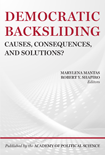
DEMOCRATIC BACKSLIDING:
Causes, Consequences, and Solutions?   DEMOCRATIC BACKSLIDING: CAUSES, CONSEQUENCES, AND SOLUTIONS?

About US

Academy of Political Science

The Academy of Political Science, promotes objective, scholarly analyses of political, social, and economic issues. Through its conferences and publications APS provides analysis and insight into both domestic and foreign policy issues.

Political Science Quarterly

With neither an ideological nor a partisan bias, PSQ looks at facts and analyzes data objectively to help readers understand what is really going on in national and world affairs.

Stay Connected

newsstand locator
About APS