Content in

Volume 141 - Number 3 - Fall 2026

You have access
to this content
 

How Has the Conflict in Ukraine Influenced the Balance Between Strategic Autonomy and International Cooperation in Spain's Defense Industrial Policy?
Margarita del Castillo examines how the Ukraine conflict has influenced Spain’s defense industrial policy and its ability to balance strategic national autonomy with international defense cooperation.

pp. 463-478
 

Supreme Court Influence on Political Party Agendas and Policy Development, 1952–2016
Logan Strother discusses the influence of the Supreme Court on the agendas of national par-ties and argues that agenda influence is a key pathway of indirect policy influence. 

pp. 479-503
 

Where India and China Meet: Competing Regional Statecraft in Southeast Asia
Xue Gong and Daniel Balazs look at China’s and India’s regional policies in South Asia and explore disparities in the motivations, approaches, and outcomes of their regional statecraft. 

pp. 505-531
 

We Designed Donald Trump's Election
Lawrence Jacobs tracks the institutional changes that cleared the way for Trump’s rise by focusing on two seminal historical junctures during the Progressive Era and after the Democratic Party’s 1968 Chicago Convention. 

pp. 533-551
 

A Presidency Transformed, A Democracy in Danger
William G. Howell and TERRY M. MOE reflect on the implication of the core argument of their published Trajectory of Power: The Rise of the Strongman Presidency for Trump’s second term as well as for the years after. 

pp. 553-570
 

The End of the Revolution
Kenneth Lowande reviews Trajectory of Power: The Rise of the Strongman Presidency by William G. Howell and Terry M. Moe. He argues that the book raises significant questions about how scholars should respond to this historical moment.

pp. 571-584
 

Media, Communication, and Democratic Decline: Thoughts on The Paradox of Democracy
Regina G. Lawrence reviews The Paradox of Democracy: Free Speech, Open Media, and Perilous Persuasion by Zac Gershberg and Sean Illing and argues that it stirs important debate about the fate of democracy around the world.

pp. 585-594

About PSQ's Editor

ROBERT Y. SHAPIRO

Full Access

Join the Academy of Political Science and automatically receive Political Science Quarterly.

CONFERENCES & EVENTS

APS Forum | Book Talk - The Insiders' Game: How Elites Make War and Peace
June 22, 2026
WEBINAR

MORE ABOUT THIS EVENT VIEW ALL EVENTS

Editor’s spotlight

CONTRIBUTIONS TO POLITICAL SCIENCE

Governing by Decree: The Trump Presidency and the Decline of “Legislating Together”
Desmond King

Search the Archives

Publishing since 1886, PSQ is the most widely read and accessible scholarly journal with distinguished contributors such as: Lisa Anderson, Robert A. Dahl, Samuel P. Huntington, Robert Jervis, Joseph S. Nye, Jr., Theda Skocpol, Woodrow Wilson

view additional issues

Most read

Articles | Book reviews

Understanding the Bush Doctrine
Robert Jervis

The Study of Administration
Woodrow Wilson

Notes on Roosevelt's "Quarantine" Speech
Dorothy Borg

view all

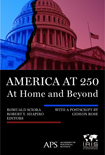
New APS Book

AMERICA AT 250: 
At Home and Beyond   AMERICA AT 250: AT HOME AND BEYOND

About US

Academy of Political Science

The Academy of Political Science, promotes objective, scholarly analyses of political, social, and economic issues. Through its conferences and publications APS provides analysis and insight into both domestic and foreign policy issues.

Political Science Quarterly

With neither an ideological nor a partisan bias, PSQ looks at facts and analyzes data objectively to help readers understand what is really going on in national and world affairs.

Stay Connected

newsstand locator
About APS