
The Journal of Public and International Affairs
Published since 1886 by the Academy of Political Science
Archive Search
Advanced Options
pp. 815-817
Divergent Democracy: How Policy Positions Came to Dominate Party Competition, Katherine Krimmel
Divergent Democracy makes important contributions to our understanding of the development of U.S. party politics. Basic features of the American party system may seem fixed—just two major parties have contested for power under the same names since the 1850s—but the fundamental bases of that competition have nevertheless shifted over time. Drawing on concepts imported from the study of comparative politics, Krimmel distinguishes between clientelistic parties that compete for support by providing selective rewards for supporters (e.g., public sector jobs, contracts, services) and programmatic parties that compete by presenting opposing stances on a range of national policy issues. Although U.S. parties have always offered alternatives (and slogans) on at least some national issues, they have not always aspired to present clearly articulated party platforms on a wide range of national issues and policies.
Even the idea that parties should compete on national issues has long been a point of intraparty debate. Scholars tend to view programmatic politics as a more “advanced” form of democracy, permitting voters to register their preferences on the policy alternatives presented to them. Historically, however, U.S. politicians often shied away from issue-based party competition, viewing the approach as needlessly divis
To continue reading, see options above.
Join the Academy of Political Science and automatically receive Political Science Quarterly.
Academy Forum | The 2024 Presidential and Congressional Elections: Small Wave, Seismic Effects
WEBINAR
Jimmy Carter's Legacy
Jimmy Carter's Public Policy Ex-Presidency
John Whiteclay Chambers II
Publishing since 1886, PSQ is the most widely read and accessible scholarly journal with distinguished contributors such as: Lisa Anderson, Robert A. Dahl, Samuel P. Huntington, Robert Jervis, Joseph S. Nye, Jr., Theda Skocpol, Woodrow Wilson
view additional issuesArticles | Book reviews
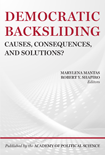 |
DEMOCRATIC BACKSLIDING:
CAUSES, CONSEQUENCES, AND SOLUTIONS? |
The Academy of Political Science, promotes objective, scholarly analyses of political, social, and economic issues. Through its conferences and publications APS provides analysis and insight into both domestic and foreign policy issues.
With neither an ideological nor a partisan bias, PSQ looks at facts and analyzes data objectively to help readers understand what is really going on in national and world affairs.


