The Journal of Public and International Affairs
Published since 1886 by the Academy of Political Science
Archive Search
Advanced Options
pp. 455-456
Exit from International Organizations: Costly Negotiation for Institutional Change, Inken von Borzyskowski and Felicity Vabulas
The most immediate indicator of whether states seek greater or lesser coordination through formal international arrangements is their entrance and exit from formal international organizations (IOs). Nonetheless, theory has paid relatively less attention to the actual circumstances of the departure side of this exchange. Exit from International Organizations offers a welcome investigation into debates concerning institutional change with a methodical examination of the circumstances of voluntary withdrawal and forced suspension from IOs across a range of circumstances and historical time. As such, it offers an important contribution to international relations theory in its efforts to understand how membership affects state preferences in their dealings with IOs.
Making the initial distinction between intentional and unintentional suspension from IOs, the book's core six chapters use a parallel format in examining the predictors of exit, its consequences, and three historical case studies aligning with the “large-n” examinations of both types of exit. In this way, it should appeal to audiences oriented toward a variety of mixed methodologies. Among its many strong points, Exit from International Organizations offers a rigorous dataset of withdrawal from 534 IOs since 1913. Reproduced in an appendix to the book, the details offer
To continue reading, see options above.
Join the Academy of Political Science and automatically receive Political Science Quarterly.
APS Forum | Book Talk - The Insiders' Game: How Elites Make War and Peace
June 22, 2026
WEBINAR
CONTRIBUTIONS TO POLITICAL SCIENCE
Governing by Decree: The Trump Presidency and the Decline of “Legislating Together”
Desmond King
Publishing since 1886, PSQ is the most widely read and accessible scholarly journal with distinguished contributors such as: Lisa Anderson, Robert A. Dahl, Samuel P. Huntington, Robert Jervis, Joseph S. Nye, Jr., Theda Skocpol, Woodrow Wilson
view additional issuesArticles | Book reviews
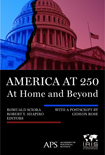 |
AMERICA AT 250:
AT HOME AND BEYOND |
The Academy of Political Science, promotes objective, scholarly analyses of political, social, and economic issues. Through its conferences and publications APS provides analysis and insight into both domestic and foreign policy issues.
With neither an ideological nor a partisan bias, PSQ looks at facts and analyzes data objectively to help readers understand what is really going on in national and world affairs.


