
The Journal of Public and International Affairs
Published since 1886 by the Academy of Political Science
Archive Search
Advanced Options
pp. 683-684
Inside Criminalized Governance: How and Why Gangs Rule the Streets of Rio de Janeiro, Nicholas Barnes
A growing body of scholarship has examined the rise in criminal violence across Latin America since the turn of the twenty-first century, a trend some observers attribute to the expansion of drug trafficking organizations. Some research focused on criminal gangs has tended to overlook questions of centralization, whereas other studies have examined this violence by focusing on cartel-state relations, inter-cartel violence, or interactions between cartels and local communities. Nicholas Barnes's Inside Criminalized Governance: How and Why Gangs Rule the Streets of Rio de Janeiro advances this literature by examining all three dimensions in the context of criminal gangs. He analyzes how and why the social contract between residents and organized gangs in Complexo da Maré shifts over time. Barnes argues that gangs govern within two dimensions—coercion and the provision of goods and services—that affect not only the levels of violence but also the conditions that allow these gangs to survive.
After three years of multimethod fieldwork, including ethnographic observation, interviews, archival research, and newspaper analysis, Barnes shows that gang behavior is influenced not only by profits but also by the expectations of community members and state security forces. The depth of his ethnographic engagement allows him to examine gang b
To continue reading, see options above.
Join the Academy of Political Science and automatically receive Political Science Quarterly.
APS Forum | Book Talk - The Insiders' Game: How Elites Make War and Peace
June 22, 2026
WEBINAR
CONTRIBUTIONS TO POLITICAL SCIENCE
Governing by Decree: The Trump Presidency and the Decline of “Legislating Together”
Desmond King
Publishing since 1886, PSQ is the most widely read and accessible scholarly journal with distinguished contributors such as: Lisa Anderson, Robert A. Dahl, Samuel P. Huntington, Robert Jervis, Joseph S. Nye, Jr., Theda Skocpol, Woodrow Wilson
view additional issuesArticles | Book reviews
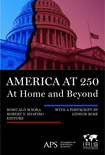 |
AMERICA AT 250:
AT HOME AND BEYOND |
The Academy of Political Science, promotes objective, scholarly analyses of political, social, and economic issues. Through its conferences and publications APS provides analysis and insight into both domestic and foreign policy issues.
With neither an ideological nor a partisan bias, PSQ looks at facts and analyzes data objectively to help readers understand what is really going on in national and world affairs.


