The Journal of Public and International Affairs
Published since 1886 by the Academy of Political Science
Archive Search
Advanced Options
pp. 95-115
Transitional Electoral Systems in Post-Communist Eastern Europe
John T. Ishiyama examines causes for the emergence of different post-Communist electoral systems in Eastern Europe. He argues that the type of democratized electoral system that emerged depended on the degree to which the Communist party and opposition leaderships had begun to think of their organizations as primarily seat-maximizing political parties, rather than as mass movements.
The Enigma of 1989: The USSR and the Liberation of Eastern Europe, Jacques Levesque Reviewed by John T. Ishiyama
Join the Academy of Political Science and automatically receive Political Science Quarterly.
Environmental Opportunities
May 8, 2025
7:30 p.m.–9:00 p.m. ET
WEBINAR
Jimmy Carter's Legacy
Jimmy Carter's Public Policy Ex-Presidency
John Whiteclay Chambers II
Publishing since 1886, PSQ is the most widely read and accessible scholarly journal with distinguished contributors such as: Lisa Anderson, Robert A. Dahl, Samuel P. Huntington, Robert Jervis, Joseph S. Nye, Jr., Theda Skocpol, Woodrow Wilson
view additional issuesArticles | Book reviews
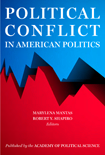 |
POLITICAL CONFLICT IN AMERICAN POLITICS |
The Academy of Political Science, promotes objective, scholarly analyses of political, social, and economic issues. Through its conferences and publications APS provides analysis and insight into both domestic and foreign policy issues.
With neither an ideological nor a partisan bias, PSQ looks at facts and analyzes data objectively to help readers understand what is really going on in national and world affairs.


