
The Journal of Public and International Affairs
Published since 1886 by the Academy of Political Science
Archive Search
Advanced Options
pp. 824-826
Cyber Sovereignty: The Future of Governance in Cyberspace, Lucie Kadlecová
The emergence of cyberspace—a global environment defined by interdependent, interconnected information systems that store and transmit data—is having transformative effects on nearly every dimension of international politics. In Cyber Sovereignty, Lucie Kadlecová tackles the implications of cyberspace for the concept of state sovereignty. This is among the most important challenges cyberspace is posing to the international system, given the inherent mismatches between the global, interconnected nature of the cyber environment and efforts by states to extend and impose their territorial sovereignty to it. Indeed, grappling with how cyberspace affects (and is affected by) questions of sovereignty is a necessary subject that informs a range of core international relations issues.
Kadlecová addresses these complex questions from the perspective of both theory and empirics, building on Stephen Krasner's seminal work, Sovereignty: Organized Hypocrisy (Princeton University Press; 1999), which disaggregates sovereignty into various forms (Westphalian, international legal, domestic, and interdependence). Kadlecová explores how Krasner's typology of sovereignty applies in cyberspace, leveraging four case studies—Estonia, the Netherlands, Turkey, and the United States—that she posits are exemplars of e
To continue reading, see options above.
Join the Academy of Political Science and automatically receive Political Science Quarterly.
Academy Forum | The 2024 Presidential and Congressional Elections: Small Wave, Seismic Effects
WEBINAR
Jimmy Carter's Legacy
Jimmy Carter's Public Policy Ex-Presidency
John Whiteclay Chambers II
Publishing since 1886, PSQ is the most widely read and accessible scholarly journal with distinguished contributors such as: Lisa Anderson, Robert A. Dahl, Samuel P. Huntington, Robert Jervis, Joseph S. Nye, Jr., Theda Skocpol, Woodrow Wilson
view additional issuesArticles | Book reviews
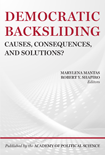 |
DEMOCRATIC BACKSLIDING:
CAUSES, CONSEQUENCES, AND SOLUTIONS? |
The Academy of Political Science, promotes objective, scholarly analyses of political, social, and economic issues. Through its conferences and publications APS provides analysis and insight into both domestic and foreign policy issues.
With neither an ideological nor a partisan bias, PSQ looks at facts and analyzes data objectively to help readers understand what is really going on in national and world affairs.


