
The Journal of Public and International Affairs
Published since 1886 by the Academy of Political Science
Archive Search
Advanced Options
pp. 832-835
The Kazakh Spring: Digital Activism and the Challenge to Dictatorship, Diana T. Kudaibergen
With authoritarianism globally resilient, scholarly accounts are once again playing catch-up with real-world developments. As important as the “color” revolutions in Serbia, Georgia, and Ukraine were in the 2000's, and as surprising as the Arab uprisings were in the 2010's, today the nexus between regime type and activist challenges again does not fit past molds. In such a context, Diana Kudaibergen—a must-read scholar of Central Asian politics and society—offers an especially welcome intervention.
Empirically, The Kazakh Spring deals with Kazakhstan, which experienced an unusual transition from the dictatorship of Nursultan Nazarbayev, the country's long-standing authoritarian president, to that of Kassym-Zhomart Tokayev, its current president. We typically expect dictators to hold power as long as possible, but Nazarbayev formally resigned from the presidency in 2019, handing the reins of power to Tokayev. Rather than leaving politics entirely, however, Nazarbayev retained special privileges as the country's founding president (elbasy) and remained chairman of the all-important Security Council.
Under the surface of a smooth handoff, social discontent was rising, as activists called for fair elections, highlighted regime abuses and excesses, strove for decolonial outcomes, pushed back agains
To continue reading, see options above.
Join the Academy of Political Science and automatically receive Political Science Quarterly.
Academy Forum | The 2024 Presidential and Congressional Elections: Small Wave, Seismic Effects
WEBINAR
Jimmy Carter's Legacy
Jimmy Carter's Public Policy Ex-Presidency
John Whiteclay Chambers II
Publishing since 1886, PSQ is the most widely read and accessible scholarly journal with distinguished contributors such as: Lisa Anderson, Robert A. Dahl, Samuel P. Huntington, Robert Jervis, Joseph S. Nye, Jr., Theda Skocpol, Woodrow Wilson
view additional issuesArticles | Book reviews
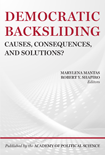 |
DEMOCRATIC BACKSLIDING:
CAUSES, CONSEQUENCES, AND SOLUTIONS? |
The Academy of Political Science, promotes objective, scholarly analyses of political, social, and economic issues. Through its conferences and publications APS provides analysis and insight into both domestic and foreign policy issues.
With neither an ideological nor a partisan bias, PSQ looks at facts and analyzes data objectively to help readers understand what is really going on in national and world affairs.


