The Journal of Public and International Affairs
Published since 1886 by the Academy of Political Science
Archive Search
Advanced Options
pp. 826-827
Faith in Rights: Christian-Inspired NGOs at Work in the United Nations, Amélie Barras
Human rights are widely perceived as secular and universalistic, in tension with the faith-based particularism of many religions. In Faith in Rights: Christian-Inspired NGOs at Work in the United Nations, Amélie Barras explores this tension as it arises in religious NGOs' advocacy efforts at the UN's Human Rights Council (HRC) in Geneva. Drawing on ethnographic, textual, and archival research, Barras highlights challenges that RNGO staff encounter as religious adherents operating in the diplomatic and pluralistic context of the HRC. Many of her interlocutors are Catholic sisters and priests, posted to Geneva by their religious orders after years of frontline humanitarian work in the Global South. They convey discombobulation at being thrust into the sedate and well-ordered environment of the HRC, far from those victims of rights abuses they endeavor to serve. Some express doubts about what they can accomplish in Geneva, with one interviewee noting that “human rights work can be tedious and often appears to be leading nowhere” (129). RNGOs granted “consultative” status may participate in limited fashion in HRC proceedings and “lobby” the forty-seven country delegations that are its real decision-makers. In these circumstances, it is not clear what constitutes success. In a periodic review of one country's huma
To continue reading, see options above.
Join the Academy of Political Science and automatically receive Political Science Quarterly.
Academy Forum | The 2024 Presidential and Congressional Elections: Small Wave, Seismic Effects
WEBINAR
Jimmy Carter's Legacy
Jimmy Carter's Public Policy Ex-Presidency
John Whiteclay Chambers II
Publishing since 1886, PSQ is the most widely read and accessible scholarly journal with distinguished contributors such as: Lisa Anderson, Robert A. Dahl, Samuel P. Huntington, Robert Jervis, Joseph S. Nye, Jr., Theda Skocpol, Woodrow Wilson
view additional issuesArticles | Book reviews
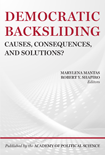 |
DEMOCRATIC BACKSLIDING:
CAUSES, CONSEQUENCES, AND SOLUTIONS? |
The Academy of Political Science, promotes objective, scholarly analyses of political, social, and economic issues. Through its conferences and publications APS provides analysis and insight into both domestic and foreign policy issues.
With neither an ideological nor a partisan bias, PSQ looks at facts and analyzes data objectively to help readers understand what is really going on in national and world affairs.


