The Journal of Public and International Affairs
Published since 1886 by the Academy of Political Science
Archive Search
Advanced Options
pp. 840-841
Indicators of Democracy: The Politics and Promise of Evaluation Expertise in Mexico, Diana Graizbord
Mexico's democratically elected government recently decided to dismantle many of the relatively autonomous public oversight bodies that were created as part of its gradual regime transition. This action highlights tensions between majority rule and public accountability. Advocates of this rollback underscore those oversight bodies’ limited results, whereas critics see evidence of authoritarianism. Democratic reformers had high expectations of those oversight bodies, including the National Council for the Evaluation of Social Development Policy (CONEVAL), the subject of Diana Graizbord’s book Indictors of Democracy: The Politics and Promise of Evaluation Expertise in Mexico. For example, an opposition senator charged that the government wanted “to disappear CONEVAL because they don’t want a third party to review whether [they] are stealing from social programs, or whether they are using them for electoral purposes.”[1] This accusation reflects the tone of the debate, yet it is puzzling for two reasons. First, that senator represented a former ruling party that was infamous for both corruption and political use of social programs; second, in practice, the government's social policy evaluation agenda was quite technical and never considered either corruption or political manipulation to fall within its mandate.
This c
To continue reading, see options above.
Join the Academy of Political Science and automatically receive Political Science Quarterly.
Academy Forum | The 2024 Presidential and Congressional Elections: Small Wave, Seismic Effects
WEBINAR
Jimmy Carter's Legacy
Jimmy Carter's Public Policy Ex-Presidency
John Whiteclay Chambers II
Publishing since 1886, PSQ is the most widely read and accessible scholarly journal with distinguished contributors such as: Lisa Anderson, Robert A. Dahl, Samuel P. Huntington, Robert Jervis, Joseph S. Nye, Jr., Theda Skocpol, Woodrow Wilson
view additional issuesArticles | Book reviews
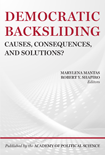 |
DEMOCRATIC BACKSLIDING:
CAUSES, CONSEQUENCES, AND SOLUTIONS? |
The Academy of Political Science, promotes objective, scholarly analyses of political, social, and economic issues. Through its conferences and publications APS provides analysis and insight into both domestic and foreign policy issues.
With neither an ideological nor a partisan bias, PSQ looks at facts and analyzes data objectively to help readers understand what is really going on in national and world affairs.


