
The Journal of Public and International Affairs
Published since 1886 by the Academy of Political Science
Archive Search
Advanced Options
pp. 842-843
Lottocracy: Democracy Without Elections, Alexander Guerrero
Is democracy salvageable without its most iconic institution: elections? In this tightly argued and provocatively detailed volume, Alexander Guerrero proposes a radical transformation of democratic governance: eschewing elections in favor of random selection. His proposal, termed lottocracy, is not an idealist thought experiment but a full-fledged institutional model designed to address what he sees as the systemic collapse of electoral representation in modern societies.
The first half of the book (chapters 1–7) offers a comprehensive critique of electoral democracy's performance in epistemic, communicative, and agential terms. Guerrero marshals insights from political theory, media studies, and empirical research to demonstrate how elections incentivize manipulation, reward charisma over competence, and entrench elite dominance. Under conditions of scale and complexity, elections no longer promote accountability or deliberation. Instead, they amplify misinformation, spectacle, and voter alienation (83–115). Particularly striking is the analysis of how media systems distort the epistemic environment through algorithmic sorting and emotional polarization (chapter 3), undermining the cognitive conditions necessary for informed citizenship (97–123).
In response, Guerrero introduces the architecture of lottocracy in the bo
To continue reading, see options above.
Join the Academy of Political Science and automatically receive Political Science Quarterly.
Academy Forum | The 2024 Presidential and Congressional Elections: Small Wave, Seismic Effects
WEBINAR
Jimmy Carter's Legacy
Jimmy Carter's Public Policy Ex-Presidency
John Whiteclay Chambers II
Publishing since 1886, PSQ is the most widely read and accessible scholarly journal with distinguished contributors such as: Lisa Anderson, Robert A. Dahl, Samuel P. Huntington, Robert Jervis, Joseph S. Nye, Jr., Theda Skocpol, Woodrow Wilson
view additional issuesArticles | Book reviews
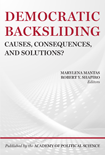 |
DEMOCRATIC BACKSLIDING:
CAUSES, CONSEQUENCES, AND SOLUTIONS? |
The Academy of Political Science, promotes objective, scholarly analyses of political, social, and economic issues. Through its conferences and publications APS provides analysis and insight into both domestic and foreign policy issues.
With neither an ideological nor a partisan bias, PSQ looks at facts and analyzes data objectively to help readers understand what is really going on in national and world affairs.


