
The Journal of Public and International Affairs
Published since 1886 by the Academy of Political Science
Archive Search
Advanced Options
pp. 845-847
Challenging Inequality: Variation Across Postindustrial Societies, Evelyne Huber and John D. Stephens
In Challenging Inequality: Variation Across Postindustrial Societies, Evelyne Huber and John D. Stephens examine the causes of rising income inequality in Western democracies. Building on the existing literature, they start by attributing the overall increase in income inequality to technological change and globalization, which are treated as exogenous “structural” processes that apply equally to all postindustrial societies. They then focus their attention on explaining why this increase in income inequality has manifested itself differently in different countries (e.g., larger increases, or more top-heavy increases, in some countries compared with others).
To explain these differences, the authors propose an “updated version of power resources theory” (3). Specifically, they focus on the “organizational and legal-institutional strength of labor and of left parties” (14). In line with their previous work, they identify “prolonged left incumbency” (19) as a key factor mitigating—through its impact on welfare generosity—the unequal consequences of technological change and globalization. Union strength, through wage coordination and resistance to proposed cuts to social and welfare spending, also plays a key role in their analysis. Using linear multivariate regressions, they show that, in suppor
To continue reading, see options above.
Join the Academy of Political Science and automatically receive Political Science Quarterly.
Academy Forum | The 2024 Presidential and Congressional Elections: Small Wave, Seismic Effects
WEBINAR
Jimmy Carter's Legacy
Jimmy Carter's Public Policy Ex-Presidency
John Whiteclay Chambers II
Publishing since 1886, PSQ is the most widely read and accessible scholarly journal with distinguished contributors such as: Lisa Anderson, Robert A. Dahl, Samuel P. Huntington, Robert Jervis, Joseph S. Nye, Jr., Theda Skocpol, Woodrow Wilson
view additional issuesArticles | Book reviews
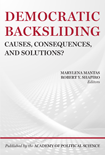 |
DEMOCRATIC BACKSLIDING:
CAUSES, CONSEQUENCES, AND SOLUTIONS? |
The Academy of Political Science, promotes objective, scholarly analyses of political, social, and economic issues. Through its conferences and publications APS provides analysis and insight into both domestic and foreign policy issues.
With neither an ideological nor a partisan bias, PSQ looks at facts and analyzes data objectively to help readers understand what is really going on in national and world affairs.


